Energy Trust of Oregon
A website that makes energy-efficiency and renewable upgrade programs accessible to 2.5 million regional customers.
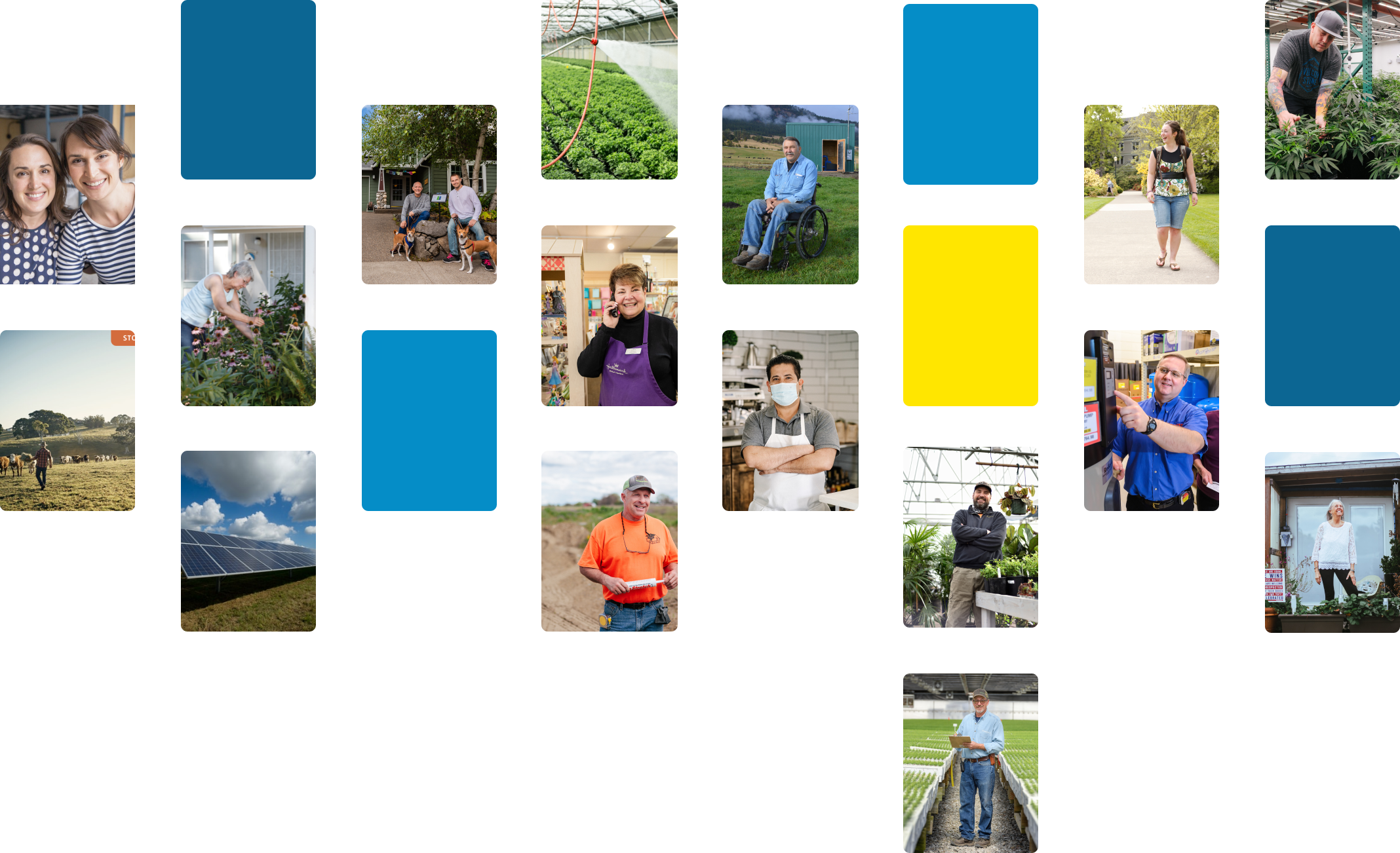
A gradual redesign: a story of long-term website iteration.
Energy Trust is dedicated to helping residents, businesses, and communities save energy and generate renewable power.
We started working with Energy Trust in 2018 to support their already existing WordPress website. Though their website had a strong foundation, there were many opportunities for improvements that would better serve their audiences. Our now long-term partnership has focused on revamping the website iteratively, in line with a larger digital strategy.
The guiding strategic vision.
The Energy Trust website needs to allow customers of all types to find information — the incentive, programmatic, or educational offerings unique to their needs — and take action. So, early on in our partnership, we developed a strategic planning document to guide website improvements.
Central to this strategy were a few core truths:
- The website needs to be easy to use and customer-centered
- Audiences need to understand specifics, without running into barriers or friction points
- The website needs to build trust

What we tackled first: accessible content and reducing clicks to action.
Improving legibility and wayfinding were our top priorities when we first started our work together. To this end, we reduced the number of clicks to key pages by half, created on-page wayfinding elements, and shifted sitewide copy to be more readable and relevant to a broad audience base – this is an accessibility win that ensures energy savings are available to everyone, regardless of educational background or English proficiency. We also built user pathways specific to users looking for incentives, which made one of the core journeys — finding applicable incentives — much more intuitive.
What came next: high-impact redesigns and improved navigation.
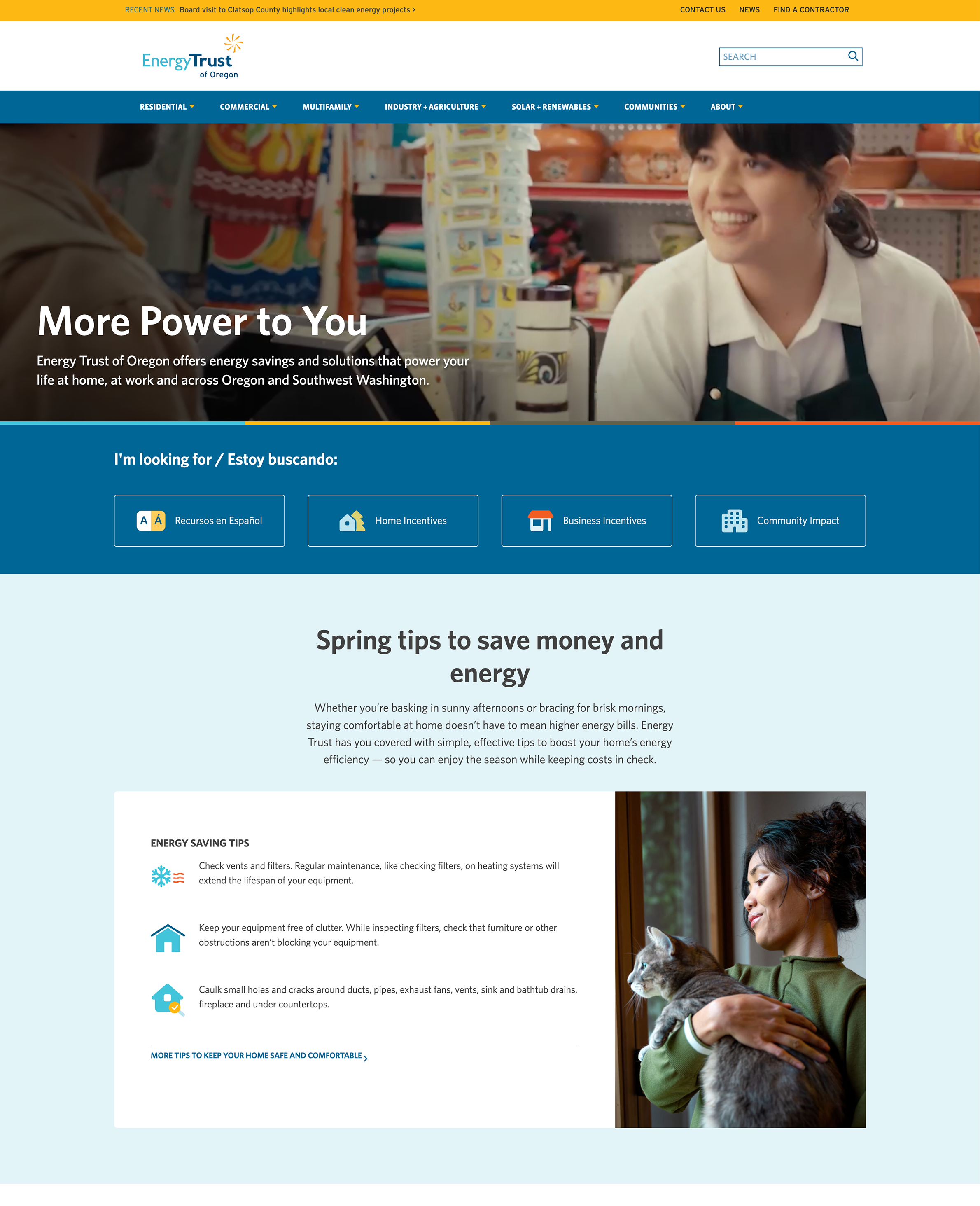
Once these critical improvements were done, we shifted our focus on bringing the website, holistically, in line with the strategic vision. This included:
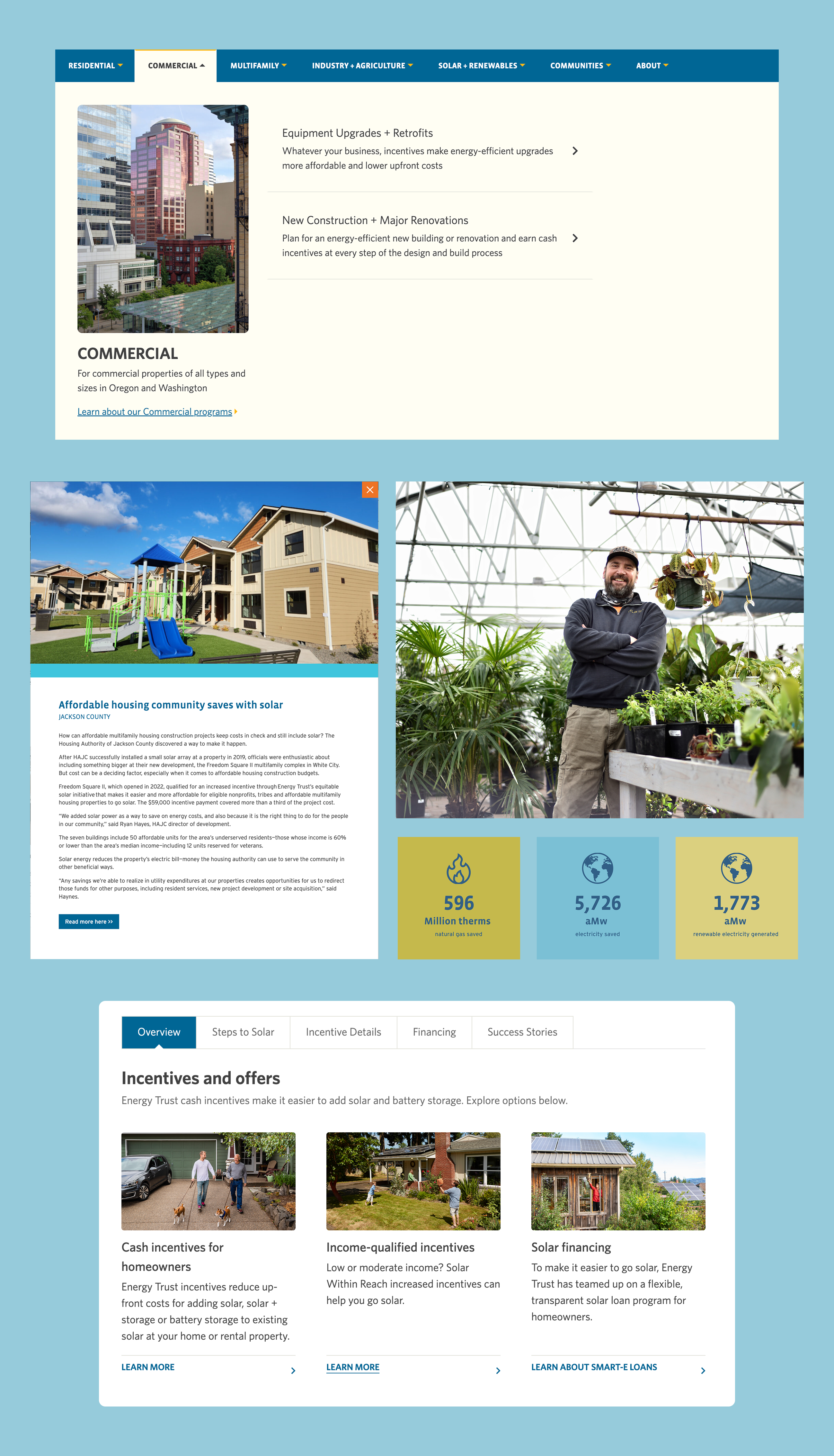
- Redesigns of high-impact sections of the website, including the Homepage, Commercial, Multifamily, and Solar/Renewables pages
- A rearchitected navigation to create clearer pathways to content and more transparent and accessible contextual language
- A templated annual report page to make annual report creation more efficient
- API work to improve the Find a Contractor tool
- Improving the website’s multilingual access
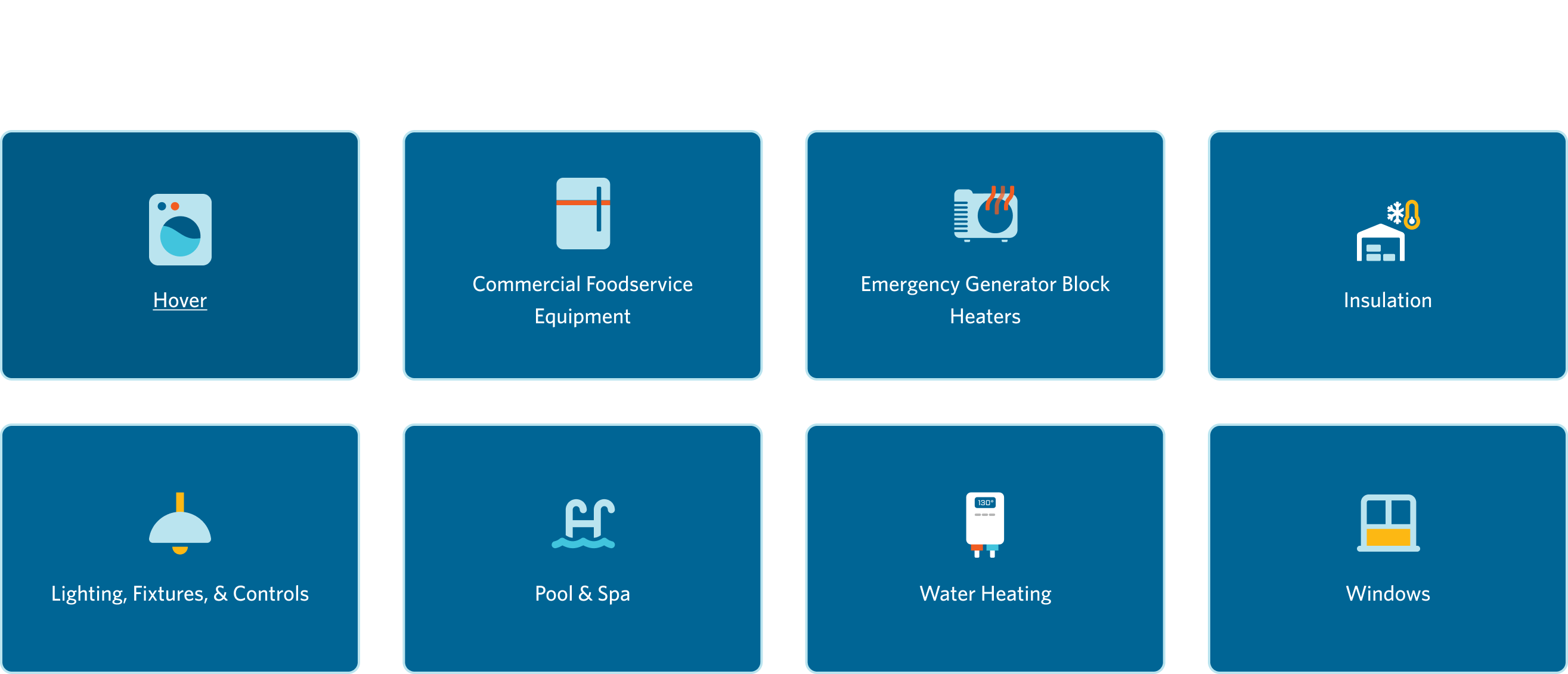
Central to all of this work was the creation of a design system. We shifted their website to be component-based, meaning pages and updates are done via a centralized set of reusable UI components, patterns, and visual standards. This makes it easier and more efficient to take on work like page redesigns, new features, and long-term maintenance.
Where we’re going.
Over our engagement we’ve been able to take a site we didn’t build and redesign it responsibly for the future in a way that’s budget-conscious.
From improved readability scores to a sitewide design system, the website is easier to use for site visitors and editors alike. Now that we’ve finished the Commercial and Renewable section refreshes, we’re going back to where we started, working through the website section by section to apply new features in line with the site’s long-term digital strategy.
Explore More